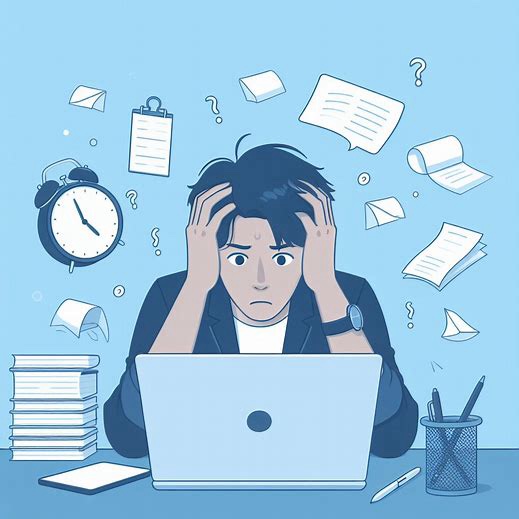
Why Work Stress Is Killing Your Mental Health (And What to Do About It)
Work stress is a common problem that affects millions of people around the world. According to the World Health Organization, work-related stress is responsible for more than 120,000 deaths per year in the United States alone¹. It can also lead to serious mental health issues, such as depression, anxiety, burnout, and even suicide.
But what if I told you that the solution to is not to find more ways to cope with it, but to reduce it in the first place? That’s right, the most effective way to improve your mental health at work is to eliminate or minimize the sources of stress that are causing you harm.
Let me explain why work stress is so detrimental to your mental health, the causes of it, and how you can reduce or prevent it. By the end of this, you will have a better understanding of how to protect your mental health at work and enjoy a happier and more productive career.
How Work Stress Affects Your Mental Health
Stress is a natural and adaptive response to a perceived threat or challenge. It prepares your body and mind to deal with the situation by increasing your heart rate, blood pressure, breathing, and alertness. However, when stress becomes chronic, excessive, or uncontrollable, it can have negative consequences for your mental health.
Chronic work stress can affect your mental health in several ways, such as:
Impairing your cognitive functions. It can interfere with your ability to concentrate, remember, learn, and solve problems. It can also cause mental fatigue, confusion, and poor decision making.
Reducing your emotional well-being. It can trigger or worsen negative emotions, such as anger, frustration, fear, sadness, and guilt. It can also reduce your positive emotions, such as happiness, satisfaction, and gratitude.
Lowering your self-esteem and confidence. It can make you feel inadequate, incompetent, or unworthy. It can also make you doubt your abilities, skills, and achievements.
Increasing your risk of mental disorders. It can contribute to the development or exacerbation of mental disorders, such as depression, anxiety, post-traumatic stress disorder, and substance abuse⁶. Work stress can also increase your suicidal thoughts and behaviors.
As you can see, work stress can have a significant impact on your mental health, affecting your thoughts, feelings, and behaviors. If left unchecked, work stress can impair your quality of life, your relationships, and your performance at work.
What Causes Work Stress
Work stress can be caused by various factors, both internal and external. Some of the most common causes are:
Excessive workload or pressure. Having too much work to do, too little time to do it, or unrealistic expectations can cause you to feel overwhelmed, exhausted, and stressed⁸.
Lack of control or autonomy. Having little or no say over how, when, or where you do your work can make you feel powerless, helpless, and frustrated.
Poor work environment or conditions. Working in a noisy, crowded, unsafe, or unhealthy environment can affect your physical and mental health[^10^]. Working in a remote or isolated setting can also cause you to feel lonely, disconnected, or unsupported.
Role conflict or ambiguity. Having unclear, conflicting, or incompatible roles or responsibilities can cause you to feel confused, uncertain, or conflicted.
Lack of support or recognition. Having insufficient or inadequate support, feedback, or appreciation from your managers, colleagues, or clients can make you feel undervalued, unappreciated, or ignored.
Poor work-life balance. Having difficulty balancing your work and personal life can cause you to neglect your health, hobbies, or relationships. It can also cause you to experience guilt, resentment, or dissatisfaction.
These are just some of the possible causes. Depending on your personality, preferences, and circumstances, you may experience other sources of stress at work. The important thing is to identify what causes you stress and how it affects you.
How to Reduce or Prevent Work Stress
The good news is that work stress is not inevitable or irreversible. There are many ways to reduce or prevent this and improve your mental health at work. Here are some of the most effective strategies:
Plan and Prioritize: Set achievable goals, organize your tasks, and use tools like calendars or to-do lists to track your progress.
Manage Your Time and Energy: Schedule work during your most productive hours, break down tasks, take regular breaks, and avoid distractions.
Seek Autonomy and Flexibility: Negotiate for more control over your work, play to your strengths, and explore flexible work arrangements.
Enhance Your Work Environment: Create a comfortable workspace with suitable lighting, temperature, and decor.
Build Social Support: Communicate effectively, seek feedback, and engage in social activities with colleagues.
Balance Work and Personal Life: Set boundaries, avoid work-related communication outside of work hours, and dedicate time to your well-being and relationships.
These are some of the proven ways to reduce or prevent work stress and improve your mental health at work. However, you don’t have to do them all at once or by yourself. You can start with one or two strategies that are most relevant or feasible for you. You can also seek or enlist the help of your manager, employer, co-workers, family, friends, or a professional.
Summary
Work stress is a serious problem that can affect your mental health in many ways. It can impair your cognitive functions, reduce your emotional well-being, lower your self-esteem and confidence, increase your risk of mental disorders, and even endanger your life.
Work stress can be caused by various factors, such as excessive workload or pressure, lack of control or autonomy, poor work environment or conditions, role conflict or ambiguity, lack of support or recognition, and poor work-life balance.
The most effective way to improve your mental health at work is to reduce or prevent it in the first place. You can do this by prioritizing and organizing your work, managing your time and energy, seeking or creating autonomy and flexibility, improving your work environment or conditions, building or maintaining social support and recognition, and balancing your work and personal life.
By following these strategies, you will be able to protect your mental health at work and become better than you yesterday.
References
- Mental health at work – World Health Organization (WHO).
- Coping with stress at work – American Psychological Association (APA)..
- Stress at work – Mental health conditions, work and the workplace – HSE.
