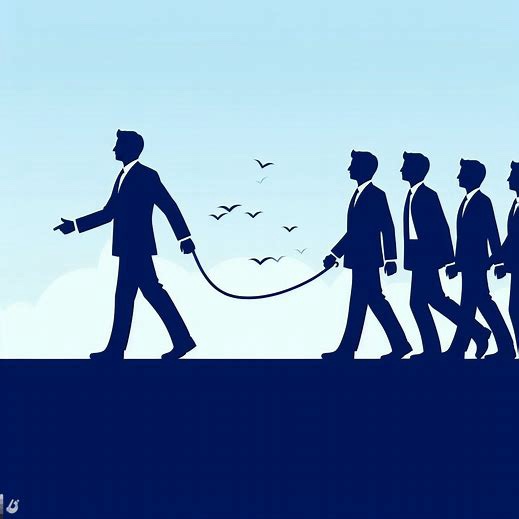
How Bad Leaders Ruin Their Followers
Have you ever wondered why some people act in ways that are contrary to their values and beliefs? Why do some people follow leaders who are dishonest, manipulative, and abusive? How do bad leaders influence their followers to become like them?
In this blog post, we will explore the psychology of leadership and followership, and how the type of person a leader is affects the behavior and personality of their followers. We will also look at some examples of bad leaders and their followers, and how to avoid falling into their traps.
The Power of Leadership
Leadership is the ability to influence others to achieve a common goal. Leaders have a significant impact on the lives of their followers, as they shape their attitudes, beliefs, emotions, and actions. Leaders can inspire, motivate, empower, and guide their followers, or they can manipulate, coerce, exploit, and harm them.
According to the social identity theory of leadership, people tend to identify with groups that share their values and interests, and they look for leaders who represent and enhance their group identity. Leaders who are able to create a strong sense of group identity and loyalty can have a positive impact on their followers’ self-esteem, performance, and well-being.
However, leaders who are narcissistic, authoritarian, or unethical can also create a strong sense of group identity, but in a negative way. They can use their power to manipulate their followers to conform to their agenda, to suppress dissent and criticism, and to justify their actions. They can also create an us-versus-them mentality, where they demonize and dehumanize their opponents, and encourage their followers to do the same.
The Psychology of Followership
Followers are not passive or mindless sheep who blindly follow their leaders. Followers have their own personalities, values, and goals, and they can choose to support or oppose their leaders. However, followers are also influenced by social and psychological factors that can affect their judgment and behavior.
One of these factors is the need for belonging. Humans are social animals who crave connection and acceptance from others. Followers who feel insecure, lonely, or alienated may seek to belong to a group that provides them with a sense of identity and belonging. They may also seek to please their leaders who offer them recognition and validation.
Another factor is the need for certainty. Humans are cognitive animals who seek to understand and predict the world around them. Followers who feel confused, anxious, or threatened may seek to reduce their uncertainty by following a leader who provides them with a clear vision and direction. They may also seek to avoid cognitive dissonance, which is the mental discomfort that arises when one’s beliefs or actions are inconsistent with one’s values or expectations.
A third factor is the need for power. Humans are motivational animals who seek to achieve their goals and aspirations. Followers who feel powerless, frustrated, or oppressed may seek to gain power by following a leader who promises them rewards and opportunities. They may also seek to express their power by following a leader who allows them to vent their anger and aggression.
Adolf Hitler and the Nazis: Hitler was a charismatic and manipulative leader who exploited the economic and political crisis in Germany after World War I. He created a cult of personality around himself and his ideology of racial supremacy and national glory. He mobilized millions of Germans to follow him and to commit atrocities against Jews, Slavs, Roma, and other minorities. He also led Germany into a devastating war that resulted in millions of deaths and destruction.
How to Avoid Becoming a Bad Follower
Being a follower is not a bad thing. In fact, being a good follower is an essential skill for being a good leader. Good followers are not blind or obedient, but rather critical and independent. They support their leaders when they are right, and challenge them when they are wrong. They also have their own values and goals, and they do not compromise them for the sake of their leaders.
Here are some tips on how to avoid becoming a bad follower:
Be aware of your own needs and motivations. Do not let your need for belonging, certainty, or power override your rationality and morality. Do not follow a leader who exploits your needs and emotions, but rather one who respects and fulfills them.
Be informed and educated. Do not rely on a single source of information, but rather seek multiple and diverse sources. Do not believe everything you hear or see, but rather verify and fact-check. Do not follow a leader who misleads and deceives you, but rather one who informs and educates you.
Be critical and independent. Do not accept everything at face value, but rather question and analyze. Do not conform to the group pressure, but rather think for yourself. Do not follow a leader who manipulates and coerces you, but rather one who empowers and guides you.
Summary
The type of person a leader affects the behavior and personality of their followers. We have seen how bad leaders can ruin their followers by using their power to manipulate, exploit, and harm them. We have also seen how to avoid becoming a bad follower by being aware, informed, and critical.
I hope that this blog post has helped you to understand the psychology of leadership and followership, and how to be a good follower and a good leader. If you liked this blog post, please share it with your friends and family, and leave a comment below. Thank you for reading!

Leave a Reply